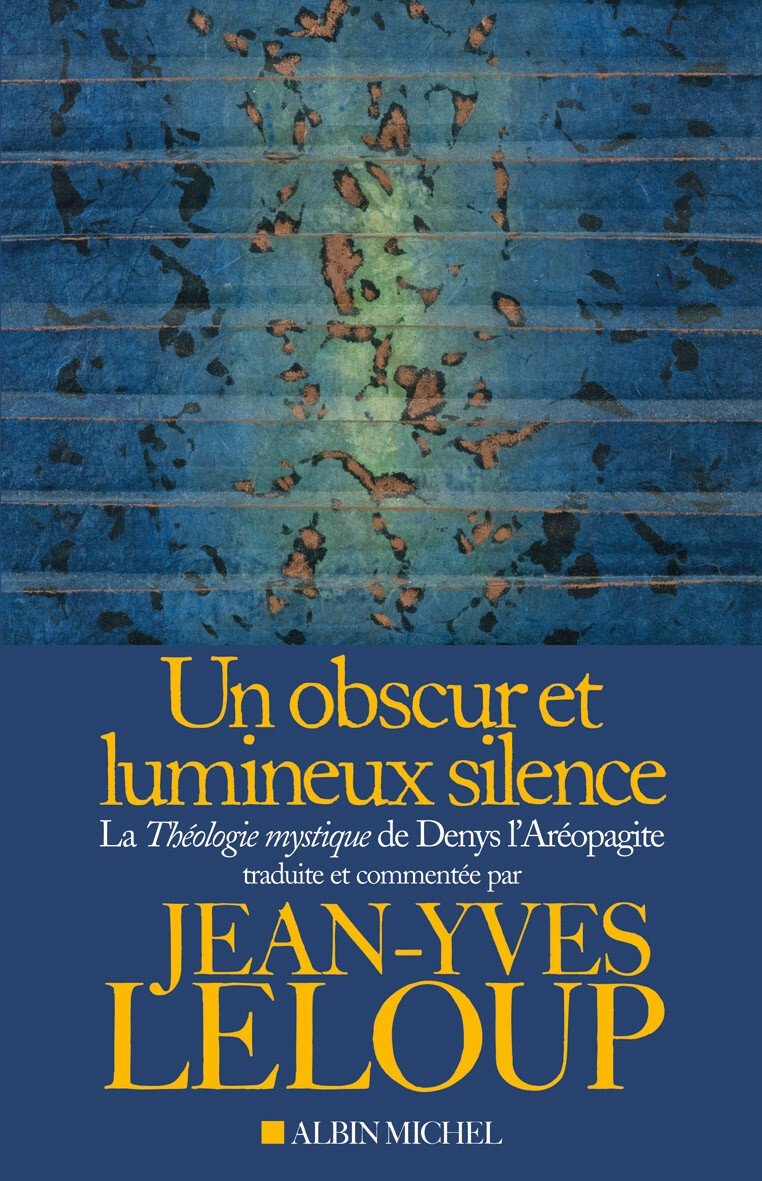
This book is dedicated to the Mystical Theology of sixth-century author Dionysius the Areopagite, and the notion of unknowing in spiritual traditions. Jean-Yves Leloup presents an interpretation and commentary of the Mystical Theology and a selection of seven letters of Dionysius, all of which reflect an internal experience; he orients them first in the tradition of the Greek Fathers, then in the Latin world, and then in the Middle Ages. In this way, he introduces Dionysius's philosophical and Christian literature, in which Dionysius contemplates the incomprehensibility of God and the knowing of Him through unknowing. Dionysius's work "celebrates the apparent and hidden Reality, manifest and non-manifest, source of perplexity and certitude, of hope and beatitude", in a "duality inseparable from emptiness and fullness, ecstasy and nostalgia". Starting from Dionysius's "obscure and luminous silence", Jean-Yves Leloup studies the "variations". Suggesting "that in every spiritual tradition there can often be found an obscure and luminous space, a silence, a Reality infinitely close and yet always elusive", he creates links with other mystics and other spiritual traditions. Dionysius's Mystic Theology is compared not only with the writings of Hadewijch d'Anvers, Meister Eckhart and Saint John of the Cross, but also with Jewish and Islamic traditions, and further with Shankara, Nagarjuna, Buddhism and Tao... The author believes that there is fertile ground for encounters and possible unity between these different traditions.

 FR
FR